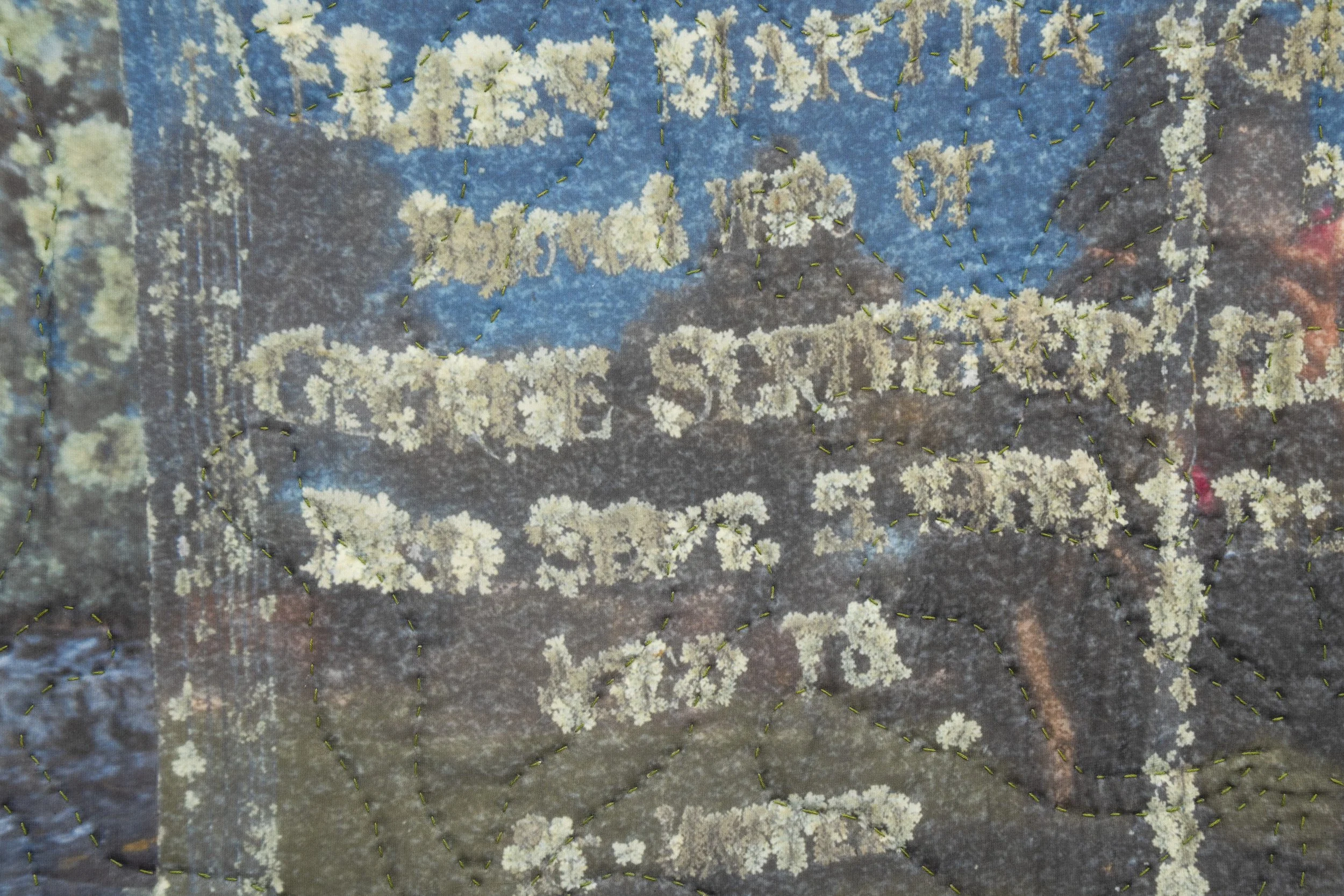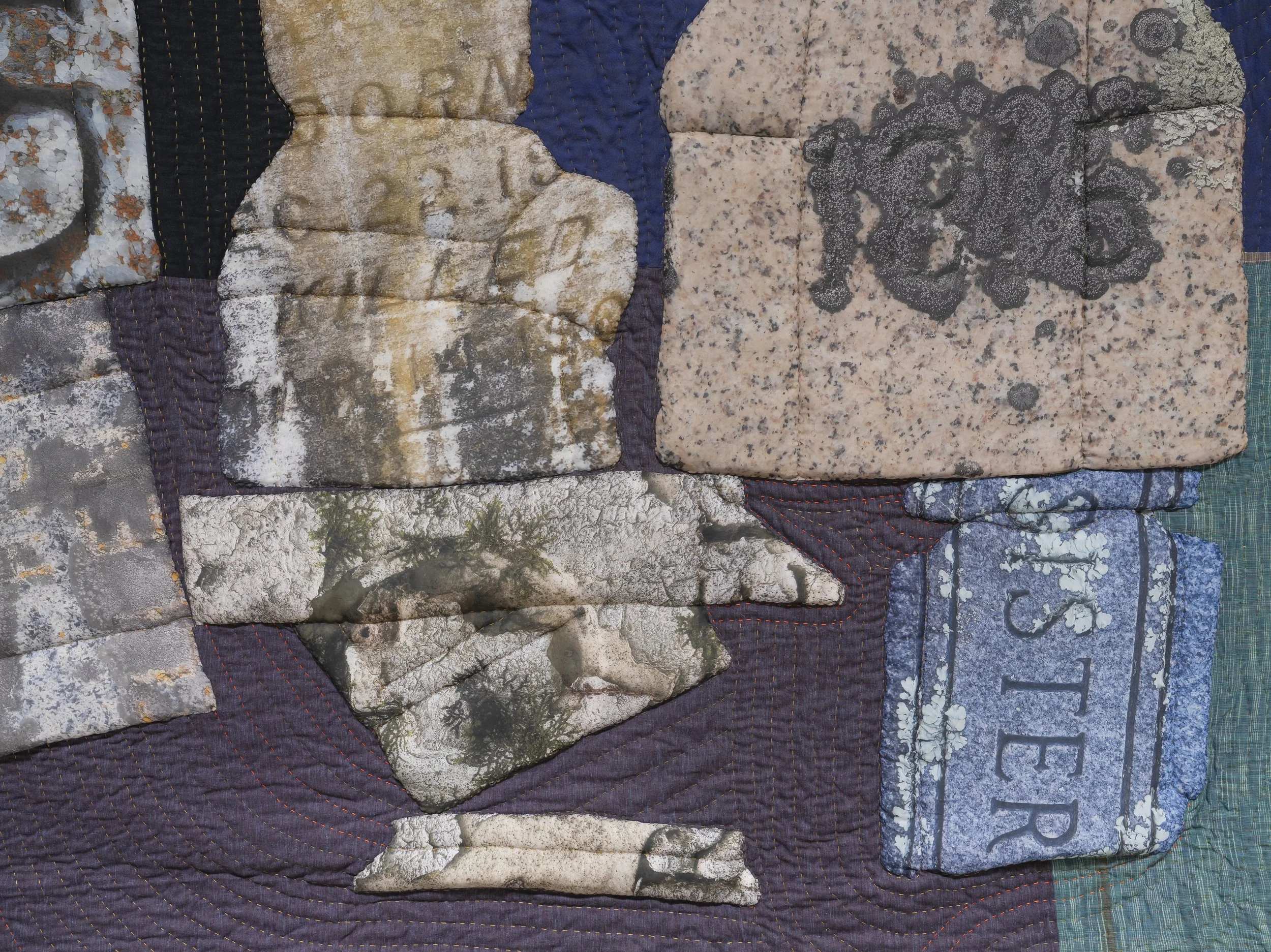
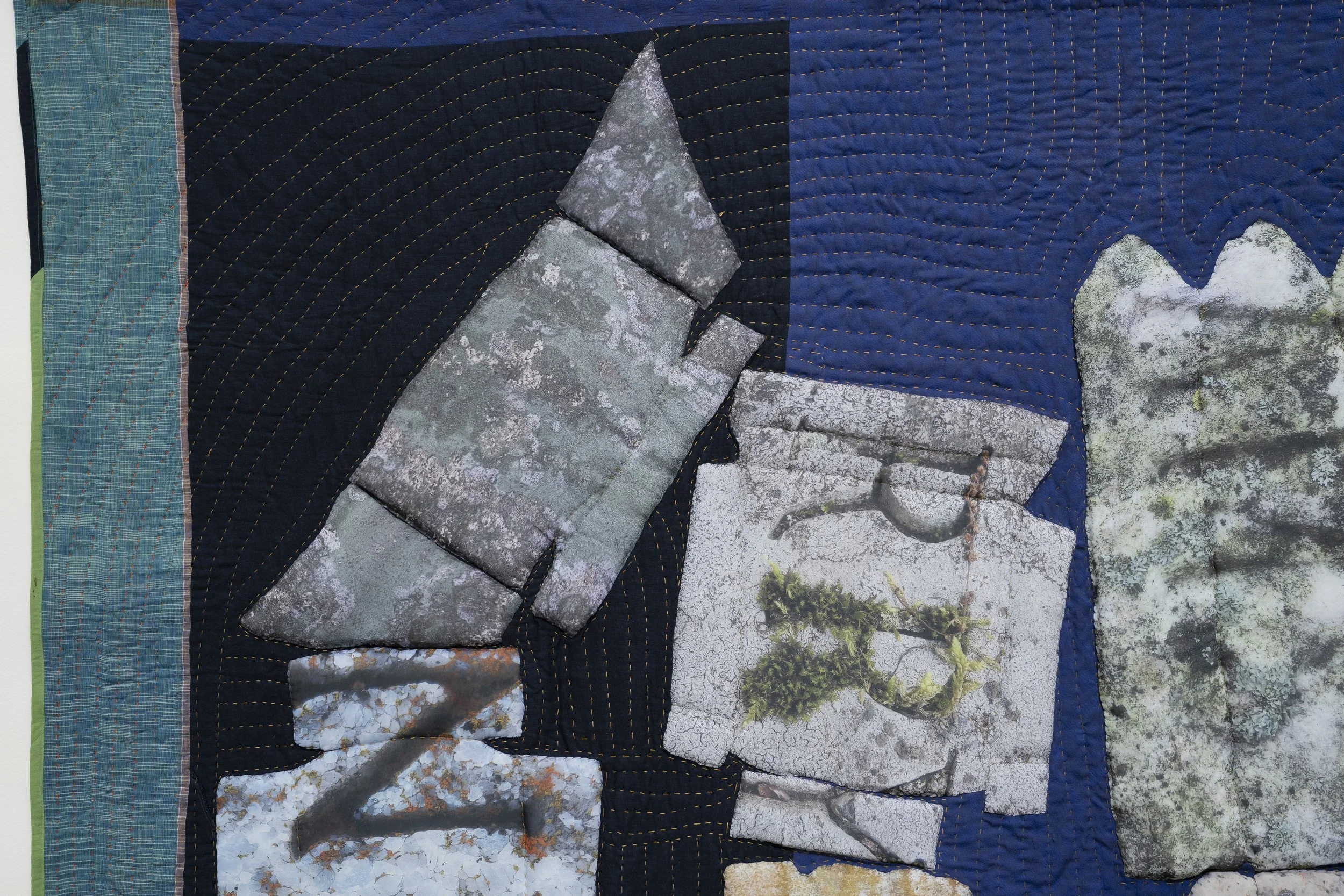
Perpetual Care quilts, 2025-Present
Perpetual Care looks closely through a loupe at lichens living on cemetery stones. “Perpetual care” refers to cemeteries that have a fund for providing care and maintenance of the cemetery in perpetuity. Who decides what constitutes perpetual care? What distinguishes benign neglect from malignancy? And can care for cemeteries intertwine reverence for human histories with respect for living ecologies?
This project responds to my experiences visiting family gravesites, and research into cleaning, caring for and restoring neglected cemeteries. Quilts are inheritances, representative of intergenerational care. By stitching living, lichen-covered surfaces of stones into the soft landscape of a quilt, I propose a disruption of assumptions about the value of “cleanliness” and the meaning of “dirt.” Can there be a grey area in cemetery landscapes, an ecotone more welcoming to complexity than the binaries of black and white, dirty and clean, neglect and care?
I am visiting my father at Pierce Brothers Westwood Village Memorial Park. He chose this cemetery so he would be buried in perpetuity alongside his mentor Franklin D. Israel. Because this is LA, Marilyn Monroe, Frank Zappa and Truman Capote are also buried here, and the cemetery is a small patch of grass surrounded by high-rise office buildings. My mom, sister and I bring sunflowers, a spray bottle of water and towels. Sometimes we forget towels, using our hands to rub water across the bronze surface, touching the engraved letters that spell his name, George Yu. Cleaning feels like an act of remembrance and care.
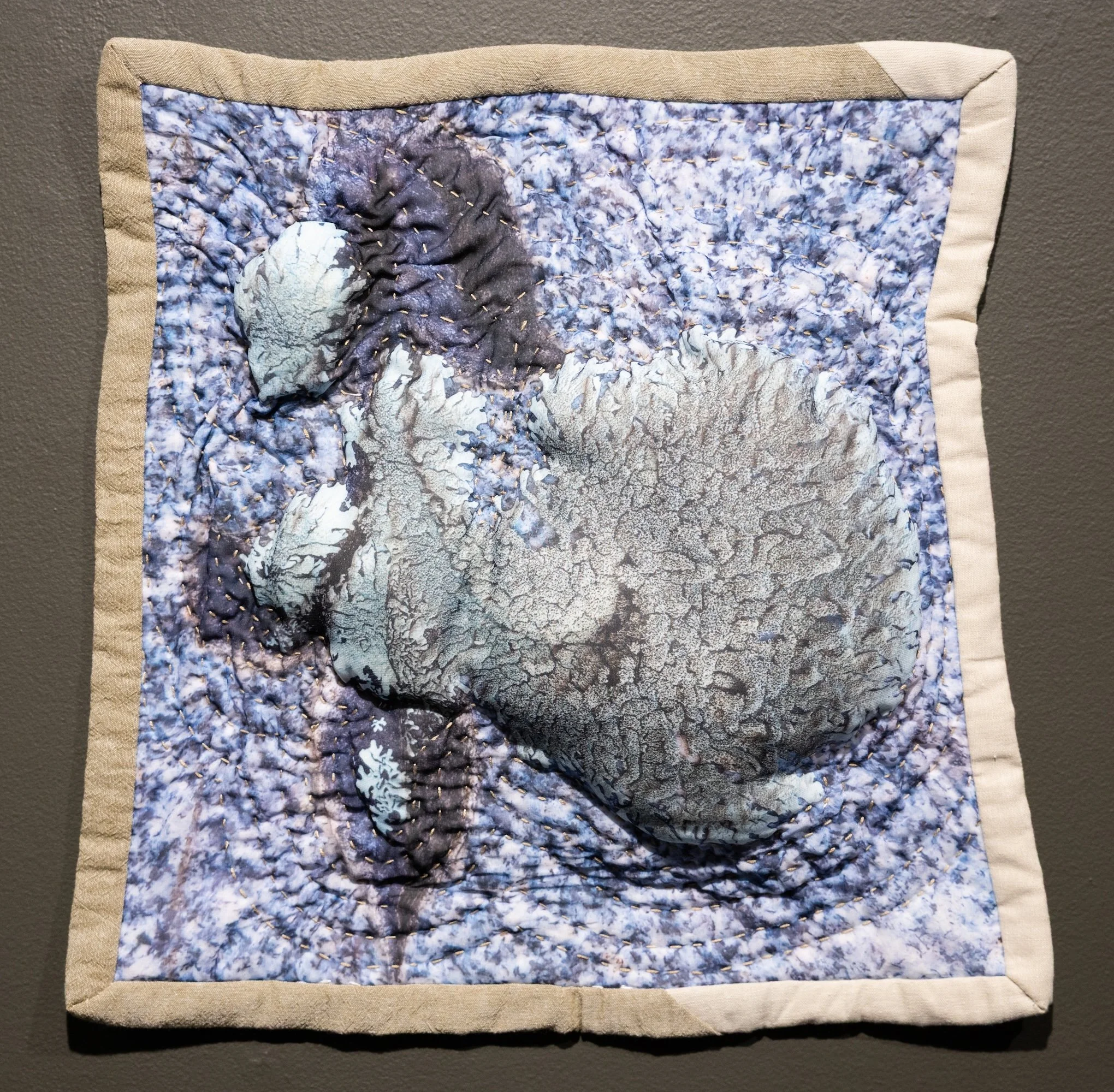
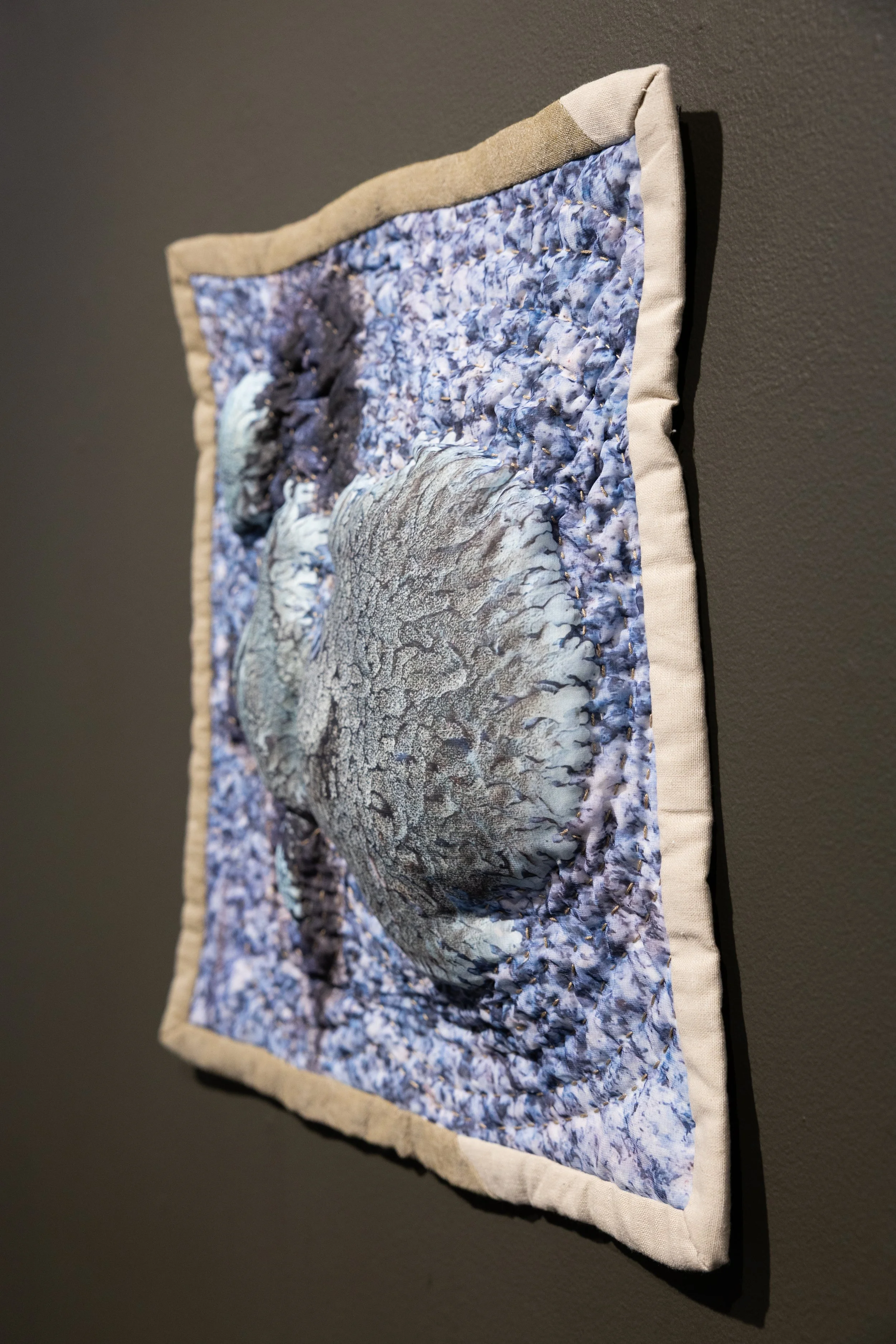
I am visiting my maternal ancestors in a cemetery in Masterton, New Zealand. I am absorbed by lush lichen growing on all sides of many gravestones. Lichen grows in the engraved letters on the front of stones, and completely covers the unpolished backs of stones with sage green foliose florets. In the engravings, crustose and foliose lichens find friendly, shaded, moist homes. Do these lichens know they are spelling out the names of bodies below, articulating and sometimes obscuring them for the cemetery’s human visitors? My 90-year-old great aunt comments that when she comes to this cemetery, she cleans the lichens off of our family members’ stones. Cleaning is how she cares for her parents’ memory.
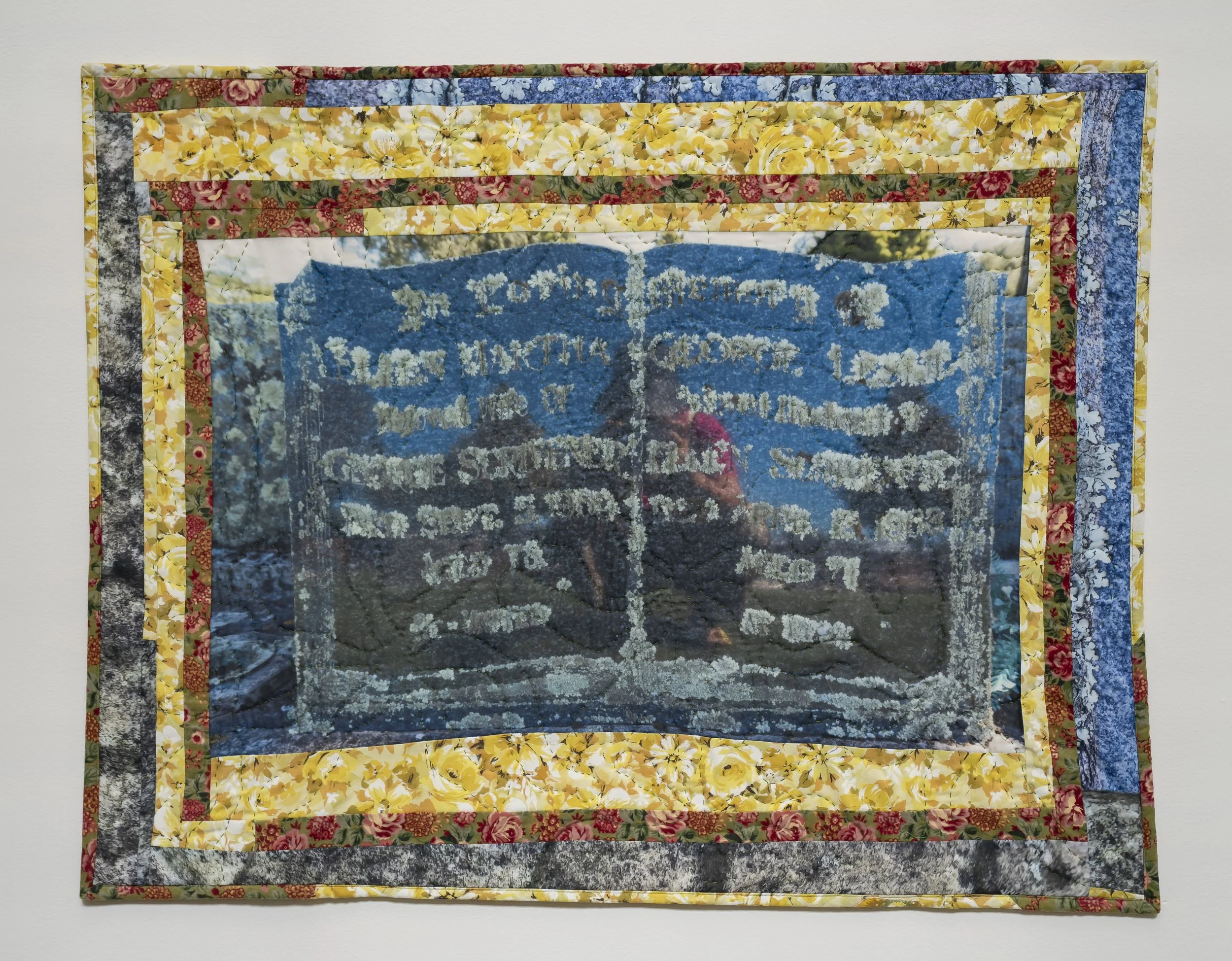
In the past, cleaning my family members’ gravestones made me feel useful, like there was a purpose for being in the cemetery beyond sitting with grief. Cemeteries are rare spaces that exist to hold grief. If I let myself sit still with grief, where does it go? Is it held by the stones, heard by the lichens, shaded by trees, and absorbed into earth?